When Celebrity Endorsements Become a Business
A celebrity appears beside a politician.
There is a photograph. Perhaps a video. Maybe the celebrity is dancing at a rally, speaking enthusiastically about a candidate, wearing the campaign colours or telling people why they should support a particular person.
And almost immediately, Nigerians begin asking the same question:
“Does this person really believe in this politician?”
Sometimes the answer may be yes.
Sometimes it may be no.
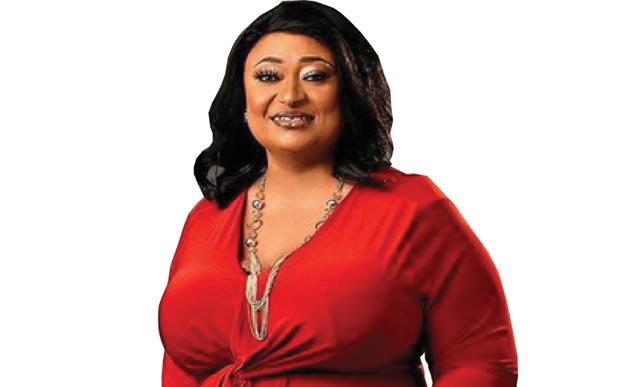
And sometimes, as actress Ronke Oshodi-Oke recently reminded us, the answer may simply be: “I am working.”
The Nollywood actress has sparked a fresh conversation after saying that Nigerians should not insult or criticise her if they see her supporting a politician. She explained that such involvement could be about making a living and putting food on the table. She also said she did not want to get deeply involved in discussing Nigerian politics.
Her comments have divided opinion.
Some people appreciate her honesty. Others argue that accepting money to promote a politician comes with responsibilities that go beyond personal survival.
And somewhere between those two positions is a conversation we probably need to have.
Celebrities have bills too
It is easy to forget that celebrities are people.
They have children to take care of. They have medical bills, rent, business expenses and family responsibilities. Their public image may be valuable, but being famous does not automatically mean being financially secure.
So when a celebrity accepts money for appearing at a political event or supporting a political campaign, the simplest explanation may sometimes be the correct one:
It is work.
We pay professionals to advertise products we may never personally use. We hire actors to appear in commercials for brands they may not personally buy. We pay influencers to promote products they may not have discovered on their own.
So why should political endorsements be completely different?
Because politics is not just another product.
And that is where the conversation becomes complicated.
A politician is not a bottle of perfume
When an influencer tells me that a particular perfume smells good, I can choose to buy it or ignore it.
The consequences are relatively limited.
But when a popular celebrity tells thousands or millions of followers to support a political candidate, the decision has implications beyond the celebrity and the person paying for the campaign.
Political decisions affect schools.
They affect healthcare.
They affect roads, jobs, security, taxation and the cost of living.
They affect people who may never have heard of the celebrity making the endorsement.
That means political influence carries a different kind of responsibility.
A celebrity may see an endorsement as a job.
The audience may see it as an expression of genuine belief.
That difference matters.
But should we blame the celebrity alone?
This is where I think we need to be careful.
It is easy to point fingers at celebrities and say, “You should know better.”
But what about the political system that creates a market for celebrity influence in the first place?
If politicians are willing to pay public figures to attract attention, create excitement and influence voters, then there will always be people willing to accept the money.
The celebrity is participating in the system.
But the system existed before the celebrity entered it.
And there is another uncomfortable question:
If we condemn celebrities for accepting political money, are we also willing to examine the politicians who spend that money?
Perhaps the conversation should not stop at the person holding the microphone.
Perhaps we should also ask who is paying for the microphone.
Honesty is better than pretending
There is something uncomfortable but refreshing about someone saying, essentially, “Don’t assume that my presence beside a politician means I believe everything that politician stands for.”
At least it gives the audience information.
Pretence can be more dangerous than honesty.
If a celebrity genuinely believes in a candidate, let them say so.
If they are being paid to appear at a campaign event, that should be clear.
If they are personally convinced about a candidate’s policies, they should be able to explain why.
The problem begins when paid influence is presented as spontaneous conviction.
People deserve to know what they are looking at.
But survival cannot answer every moral question
At the same time, “I am trying to survive” cannot automatically settle every ethical question.
Most people are trying to survive.
The journalist is trying to survive.
The civil servant is trying to survive.
The business owner is trying to survive.
The teacher is trying to survive.
The market woman is trying to survive.
But we still expect people to think about the consequences of what they do while trying to make a living.
Financial pressure can explain a decision.
It does not necessarily make every decision right.
That distinction is important.
We can have empathy for someone’s circumstances without automatically agreeing with every choice they make.
And perhaps we need to stop treating celebrities as our political compass
This may be the most important lesson.
A celebrity’s opinion should not determine how we vote.
Neither should a musician’s endorsement, an actor’s campaign appearance, an influencer’s Instagram post or a politician’s carefully produced video.
We should listen.
We should ask questions.
We should examine policies.
We should look at records.
We should compare promises with performance.
And then we should make our own decisions.
Celebrity influence works because people connect emotionally with personalities they already know and like. But familiarity is not the same thing as expertise.
Knowing an actor from movies does not mean that actor knows more about governance than you do.
The same applies to influencers, musicians and other public figures.
They may have valuable opinions. But they are still opinions.
Perhaps the real issue is not that celebrities take political money
Perhaps the deeper issue is that we have created a political culture where money, popularity and influence can become confused with credibility.
A famous person standing beside a politician does not automatically make that politician competent.
A large crowd at a rally does not automatically mean the candidate has earned the people’s trust.
And a celebrity receiving payment does not automatically make the candidate good or bad.
We need to become better at separating influence from evidence.
That is especially important as Nigeria moves closer to another election cycle and political campaigns become more visible.
Celebrities will campaign.
Politicians will spend money.
Influencers will post.
Videos will go viral.
Arguments will fill social media.
But beneath all the noise, there will still be one important question:
What kind of leadership are we actually choosing?
Because at the end of the day, the celebrity may collect the campaign fee and go home.
The politician may win or lose.
But the rest of us will still live with the consequences of the choices made at the ballot box.
And that is why our political decisions should be based on more than who we recognise, who we admire, or who appears in a viral video.
People can sell their influence.
We should never sell our judgment.