
When TikTok Becomes a Career Problem
…What the Madonna University controversy teaches us
Social media has changed the way young people express themselves. A dance, a joke, a challenge or a short video can be created in a few minutes and shared with thousands, sometimes millions, of people. What many people do not always consider, however, is that something created for a few seconds of online attention can remain long after the trend has disappeared.
The recent controversy involving nursing students of Madonna University, Elele Campus, Rivers State, is a good example.
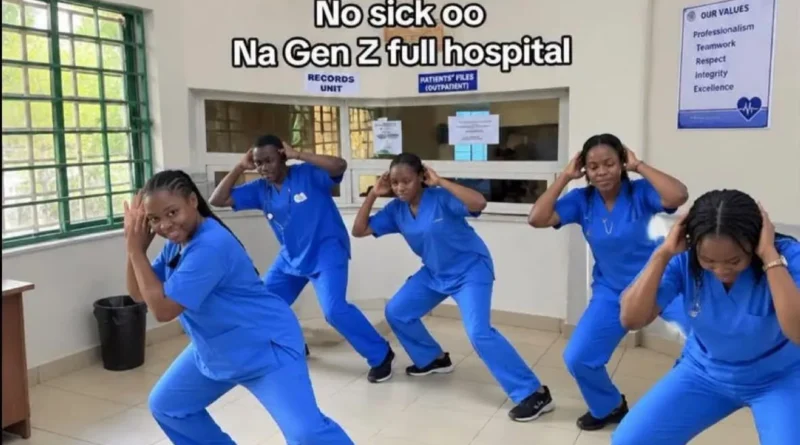
A video showing nursing students dancing in different parts of the university environment, including a hospital waiting area and corridor, went viral after it was posted as part of what has been described as the “Gen Z nurses” social media trend. The video carried the caption, “No sick oo, nah Gen Z full hospital.” A version of the video reportedly attracted more than 1.7 million views on X.
What happened afterwards has turned a simple social media trend into a national conversation.
Madonna University took disciplinary action against the students involved. According to reports and a subsequent clarification from the National Association of Nigerian Students, one final-year nursing student was expelled, while 14 other 500-level students were suspended.
The university’s full official statement is expected on Monday, October 5. Its Director of Communications and Public Affairs, Chima Achu, confirmed that the university was preparing a formal response.
The reaction has been divided. Some people believe the university was right to take a firm position. Nursing is a profession built around trust, responsibility, confidentiality, dignity and professionalism. Students training for such a profession are not simply learning how to pass examinations. They are being prepared for a career in which their behaviour can affect patients, colleagues and the profession’s reputation.
From that perspective, recording a playful video in a clinical environment may appear harmless to the students but could be viewed differently by the institution and the public.
There is also the question of the message being communicated. Imagine being a patient walking into a hospital and seeing healthcare workers filming a dance video in a hospital where you went for treatment. Some patients might find it entertaining, but some others might wonder whether the people caring for them understand the seriousness of their situation.
That distinction matters.
At the same time, another question deserves to be asked: What should discipline look like when young people make a serious mistake?
The National Association of Nigerian Students has appealed to Madonna University to reconsider the expulsion and replace it with a warning or another corrective measure. NANS acknowledged that the students’ behaviour was inappropriate and inconsistent with the standards expected of nursing students, but argued that expulsion at the final stage of a professional programme could have a lasting impact on the student’s education and career.
The Nigerian Universities Nursing Students’ Association has also reportedly begun discussions with relevant authorities to seek a review of the sanctions.
This is where the conversation becomes more interesting than simply asking whether the students were right or wrong.
They were old enough to understand that their actions had consequences, but they were also young people still learning.
Education is not only about teaching people what to do. It is also about teaching them what happens when they get things wrong.
There is a difference between accountability and permanently destroying someone’s future.
That does not mean that every disciplinary action should be cancelled because someone is young. It means that institutions have to consider the nature of the offence, the circumstances, the student’s previous record, the potential harm caused and whether the punishment achieves the purpose of correction.
There is another lesson here for everyone who uses social media. Going viral is not the same thing as being harmless.
We sometimes post things because they are funny, everyone else is doing them or because we want people to notice us. We rarely stop to ask what that post might look like five years later.
The internet doesn’t know we have changed. The employer interviewing us may see it; a professional body may see it; a university may see it; and a client may see it. Someone who knows nothing about us may see a 15-second clip and form an opinion about who we are.
This is particularly important for young people entering professions such as nursing, medicine, law, teaching, banking and other fields where professional conduct matters.
Social media is not the enemy. Young people should be able to have fun, express themselves and participate in trends.
But professional identity and online identity are no longer completely separate things.
What we post can become part of our reputation. And perhaps that is the real lesson from the Madonna University controversy.
Before joining the next viral challenge, ask one simple question: “If this video followed me into my future career, would I still be comfortable with it?”
Sometimes, that question is enough to make us put the phone down.