37 Miners Died in NSCDC Custody: What Happened in Niger State?
Some news stories stay on social media for a few hours before another story replaces them. Then some stories force people to stop scrolling and ask difficult questions.
It can investigate wrongdoing without creating another tragedy.
The deaths of 37 suspected illegal miners in the custody of the Nigeria Security and Civil Defence Corps (NSCDC) in Niger State belong to the second category.
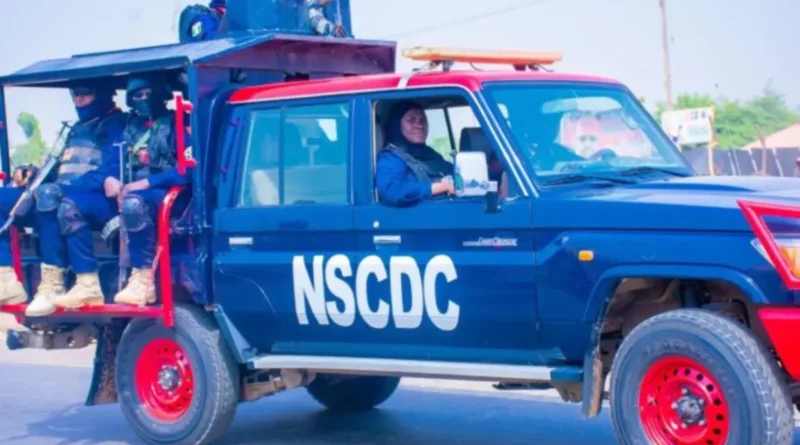
The men were arrested during operations against suspected illegal mining around the M.I. Wushishi and Lukoto areas of Niger State on September 15 and 16. Their deaths were discovered on September 17. What happened inside the detention facility is now the subject of investigations by several government bodies.
The scale of the tragedy is difficult to ignore. So are the questions surrounding it.
How did 37 people die in custody?
This is the question at the centre of everything. The NSCDC initially described the deaths as resulting from a suspected disease outbreak. However, that explanation has not been established as the cause of death. Survivors have described severe overcrowding and poor ventilation, while other reports have raised the possibility of suffocation or exposure to hazardous substances associated with illegal mining. (AP News)
Niger State Governor Mohammed Umaru Bago has also cautioned against reaching conclusions before investigations are completed. He said some bodies reportedly had blood or froth around their mouths and burns on some bodies, adding that investigators would need to determine whether poisoning, suffocation or another factor was responsible. (Vanguard News)
That distinction matters. At the moment, the deaths are confirmed; the precise cause is not.
The protests added another layer to the tragedy
As news of the deaths spread, anger grew in Minna. Residents took to the streets demanding answers and justice. The protests later became violent, with security forces using tear gas and reports emerging of gunfire. The Niger State Government imposed a 24-hour curfew in parts of Minna as tensions escalated.
There have also been allegations that security forces used live ammunition against protesters. Human-rights organisations have called for those claims to be investigated.
Again, this is an area where Nigerians need to distinguish between what has been reported and what has been established. There are reports and witness accounts, but the full circumstances surrounding the protest response also require investigation.
The Federal Government has now opened an independent investigation
The response has moved beyond the initial suspension of the Niger State NSCDC commandant.
On September 19, the Federal Government constituted a 10-member independent committee to investigate the deaths. The committee is expected to establish the identities of those who died, examine their arrests and detention, determine the cause and circumstances of their deaths, and establish whether negligence, misconduct or other responsibility was involved. (State House Abuja)
The committee has two weeks to submit its report.
Its membership includes representatives from the Minna Emirate Council and Niger State Government, the Miners Association of Nigeria, a former DSS deputy director-general, a former Nigeria Law School director-general, a retired assistant inspector-general of police, a medical expert, lawyer and human-rights activist Deji Adeyanju, journalist Zainab Suleiman Okino and public affairs analyst George Agbakahi.
The government has also directed that relevant records and evidence be preserved and warned that attempts to destroy evidence, intimidate witnesses or obstruct the investigation would be treated as serious offences.
More than the commandant has been suspended
The Federal Government has suspended the Niger State NSCDC commandant, Suberu Siyaka Aniviye, along with other officers connected to the arrests, investigation, custody and security arrangements.
The State House published the names of the suspended officers, while reports put the total at 21, including the commandant. The NSCDC has also deployed Abdulhamid Kabara as the new Niger State commandant following Aniviye’s suspension.
These suspensions are administrative measures pending the investigation. They should not be treated as findings that the suspended officers caused the deaths.
But there is another issue we cannot ignore
The people who died were detained over alleged illegal mining. Illegal mining is a serious problem in Nigeria. It has implications for environmental degradation, public safety and, in some parts of the country, the financing of criminal networks.
But that does not remove the responsibility of the state to protect people once they are in custody. This is where the tragedy becomes bigger than illegal mining.
It becomes a question about what happens to a person’s rights after the state takes away their freedom.
CISLAC, the Nigerian chapter of Transparency International, has argued that allegations of illegal mining cannot justify detention conditions that endanger people’s lives or dignity. The organisation has called for an independent investigation involving forensic experts and the National Human Rights Commission, as well as publication of relevant detention and medical records.
That is an important part of the conversation.
There are also questions about the victims
Reports indicate that some of those detained were very young. Reuters reported that many were between 14 and 18 years old. If that is confirmed for individual victims, it raises another difficult question: why were minors involved in dangerous mining activities in the first place?
That question leads beyond this particular detention centre.
It takes us into poverty, unemployment, access to education, child labour, family survival and the desperation that can push young people into dangerous informal work.
CISLAC has similarly pointed to poverty, unemployment, inadequate access to education, insecurity and weak social protection as factors contributing to the vulnerability of communities involved in illegal mining.
So there are really two responsibilities here. The government has a responsibility to enforce mining laws and protect communities from the consequences of illegal mining. It also has a responsibility to ensure that enforcement itself does not expose people to abuse, neglect or preventable death.
What Nigerians should resist doing
Understandably, social media is filled with anger, photographs, videos, personal accounts and theories about what happened.
But this is one story where sharing before verifying could cause more harm.
The cause of death has not yet been conclusively established. Allegations about poisoning, suffocation, deliberate killing or other causes should therefore remain allegations until supported by credible evidence.
The same applies to claims about individual officers.
The investigation should establish what happened, who was responsible, whether procedures were followed and whether anyone committed an offence.
Those are questions that deserve evidence rather than speculation.
The real test will be what happens after the headlines disappear
Nigeria has seen investigations announced after tragedies before. The important question is not simply whether another committee has been constituted.
The important questions are whether the investigation will be sufficiently independent, whether its findings will be made public, whether those found responsible will face appropriate consequences, and whether detention practices will change so that something similar does not happen again.
The Federal Government has given the new panel two weeks to report. That gives Nigerians a clear point at which to ask what the investigation has established, because 37 people went into state custody alive.
Whatever the final findings reveal about the circumstances of their deaths, that fact alone demands serious answers.
And perhaps the most important lesson is that enforcing the law and protecting human life should never be treated as competing responsibilities.
A government can fight illegal mining and still be expected to protect people in its custody. It can enforce the law and still respect human dignity, and investigate wrongdoing without creating another tragedy in the process.
The country now needs the truth about what happened in Niger State. And after the truth is established, Nigerians will also want to know what will be done to ensure that it does not happen again.