
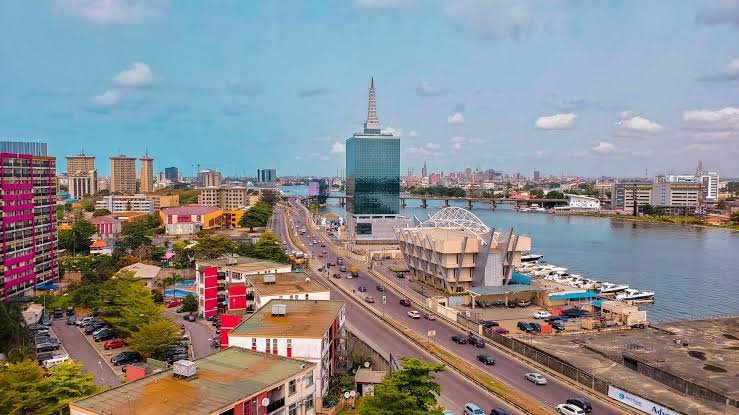
What Uber’s Exit and Dangote’s IPO Tell Us About Doing Business in Nigeria
Two major business stories have recently captured attention in Nigeria, and at first glance, they could not appear more different.
Uber is leaving Nigeria after 12 years of operations, while Dangote Refinery is preparing for one of the largest public share offerings in the country’s history.
One company is walking away from the Nigerian market. Another is asking investors to put more money into one of the country’s biggest industrial projects.
It is tempting to treat these as completely separate stories, but perhaps they are telling us something about the same thing: what it takes to build, operate and grow a business in Nigeria.
Uber Is Leaving
Uber began operations in Lagos in 2014 and gradually became part of everyday transportation for many Nigerians. For riders, the app offered an alternative to traditional taxis, while for drivers, it created another opportunity to earn an income.
That chapter has now ended.
Uber discontinued its operations in Nigeria on September 2, 2026. The company said that after reviewing its business, it had decided to wind down operations in Nigeria and Uganda as part of its changing business priorities and investment focus across Africa.
There has been considerable speculation about why the company left.
Some of the conversation focused on the recent Federal Airports Authority of Nigeria directive concerning e-hailing operations at airports. However, Uber has clarified that its decision to leave Nigeria was not related to that directive. FAAN has also denied being responsible for Uber’s exit.
That clarification matters because it reminds us of something important about business reporting: sometimes the explanation that makes the most sense on social media is not necessarily the explanation provided by the company itself.
Uber has not publicly given a detailed Nigeria-specific explanation beyond its business review and changing investment priorities.
However, the broader operating environment is difficult to ignore.
Nigeria’s ride-hailing industry has had to deal with rising fuel costs, inflation, currency volatility, changing consumer purchasing power and pressure on operating costs. These challenges affect both companies and drivers, and they can make it increasingly difficult to maintain a business model that depends on keeping services affordable while also remaining profitable.
Uber’s exit therefore deserves attention, but it would be too simplistic to conclude that the company left Nigeria simply because Nigeria is impossible to do business in.
Uber is also restructuring globally. The company announced plans to cut about 3,300 corporate jobs as it simplifies its organisational structure and redirects resources towards areas it considers important for future growth, including autonomous mobility.
So Nigeria’s business environment may be part of the wider picture, but it is not necessarily the entire picture.
Then There Is Dangote
While Uber is leaving, Dangote Refinery is moving in the opposite direction.
The Securities and Exchange Commission has approved the refinery’s proposed IPO, which could raise approximately ₦2.15 trillion through the sale of 4.1 billion shares at ₦525 per share. The transaction has been described as potentially the largest share sale in Africa.
The order book is expected to open on September 14. This is significant for more than just Dangote. The refinery is already one of the most ambitious industrial projects Nigeria has seen. The company has plans to increase capacity significantly, with the eventual target of about 1.4 million barrels per day. The new capital is expected to support expansion and other strategic plans.
There is something particularly interesting about these two stories appearing almost together. One company is reducing its exposure to Nigeria; another is inviting investors to increase their exposure to a Nigerian industrial asset.
What does that tell us?
Nigeria Is Not Simply a Good or Bad Place for Business
We sometimes discuss Nigeria as though the country can be given one simple label.
- Business-friendly.
- Business-hostile.
- Attractive to investors.
- Unattractive to investors.
The reality is much more complicated.
Different industries experience Nigeria differently.
A technology platform that depends on thousands of independent drivers, affordable transportation and a delicate balance between customer prices and driver earnings will face different challenges from a large industrial company operating a refinery.
The required capital is different; the regulatory environment is different; the infrastructure requirements are different; the relationship with the government is different; the customers are different, and the risks are different.
This is why one company’s exit should not automatically be interpreted as proof that every business should leave Nigeria, just as one company’s huge investment should not be used as proof that everything is working perfectly.
Both stories can be true at the same time.
The Cost of Doing Business Matters
For businesses operating in Nigeria, the question is not simply whether there is a large market. There is. Nigeria has a huge population, a young consumer base and enormous unmet demand across many sectors. The bigger question is whether businesses can serve that market sustainably.
- Can they obtain reliable electricity?
- Can they move goods efficiently?
- Can they access foreign exchange without excessive uncertainty?
- Can they manage taxes and regulatory requirements?
- Can they employ people at a cost that works for the business while still paying workers fairly?
- Can customers afford the products and services?
- Can investors predict what the business environment will look like several years from now?
These questions matter because a large market is valuable only when businesses can operate successfully within it.
What Does This Mean for Nigerian Businesses?
There is another lesson here that goes beyond foreign companies. Nigerian entrepreneurs are dealing with many of the same pressures.
A small business owner may not be worried about an international IPO or a global corporate restructuring, but they understand the challenge of rising costs.
The restaurant owner knows that ingredients cost more; the manufacturer knows that electricity and transportation affect production costs; the online seller knows that logistics can determine whether a customer completes a purchase, and the professional running a small consultancy knows that clients are also under financial pressure.
When the cost of doing business rises faster than the ability of customers to spend, everybody feels the pressure.
That is why conversations about the Nigerian economy should not focus only on GDP figures, investment announcements and stock-market performance.
We should also ask whether businesses are able to survive, whether existing companies are expanding or shrinking, whether new businesses are being created, whether entrepreneurs are hiring more people, or whether investors feel confident enough to commit capital for the long term.
These are practical measures of economic health.
There Is Also a Lesson About Investment
The Dangote Refinery IPO is particularly interesting because it allows ordinary and institutional investors to participate in a major Nigerian industrial enterprise.
It also presents a test. Investors will have to decide whether the valuation makes sense, whether the refinery’s future growth prospects justify the price and whether the business can deliver the returns they expect.
That is how a functioning capital market should work.
Investors should not buy simply because a famous name is attached to an investment. They should study the opportunity, understand the risks and make informed decisions. The excitement surrounding the IPO should therefore be accompanied by serious analysis.
A large company is not automatically a good investment, a famous entrepreneur is not automatically a guarantee of returns, and a major project can still face major risks.
Perhaps This Is the Bigger Conversation
Uber’s exit and Dangote Refinery’s IPO tell two very different stories, but neither should be viewed in isolation.
Uber’s departure reminds us that companies constantly review where their capital, people and attention can generate the best returns.
Dangote Refinery’s IPO reminds us that investors are still willing to commit significant capital to opportunities connected to Nigeria when they believe the potential justifies the risk.
The challenge for Nigeria is to create more reasons for businesses to stay, expand and invest. That does not mean preventing companies from leaving. Businesses must be free to make commercial decisions. It means creating an environment in which staying makes economic sense.
It means improving infrastructure, making regulation more predictable, reducing unnecessary barriers, strengthening institutions and creating conditions where businesses can plan beyond the next few months.
It also means recognising that investors do not look only at how attractive the Nigerian market is.
They look at the cost of serving that market, risk, predictability, infrastructure, the ability to move money, and the possibility of making a profit and taking that profit back into the business.
We Should Pay Attention to Both Stories
Perhaps the most useful thing we can do is resist the temptation to celebrate one story while using the other to condemn Nigeria.
Uber leaving is not proof that Nigeria has nothing to offer. Neither is Dangote Refinery raising billions proof that every problem facing Nigerian businesses has disappeared.
Both stories simply show us different sides of the Nigerian economy.
Nigeria remains a country with enormous opportunities, but those opportunities exist alongside enormous challenges.
The question is whether we can reduce the challenges enough to make the opportunities worth pursuing. Because the real goal should not simply be to attract businesses into Nigeria.
The goal should be to create an environment where businesses can come, stay, grow, employ people, pay taxes, compete fairly and build for the long term. That is the kind of business environment that benefits everyone.
And perhaps that is the conversation we should be having whenever a major company enters Nigeria, leaves Nigeria or asks investors to put more money into Nigeria.
Not simply, “Is Nigeria good for business?”
But rather, “What kind of businesses can succeed here, what is making success difficult, and what can we do to make it easier for more businesses to succeed?”
That is a much more useful question.