AI vs Nigerian Creators: Who Owns Our Creative Work?
Artificial intelligence is changing how people create, work and communicate, and Nigerian creators are already part of that transformation. Writers use AI to brainstorm ideas and improve drafts, designers experiment with image generation, musicians explore new production tools, and businesses use artificial intelligence to create content faster.
The opportunities are enormous, but so are the questions.
One of the biggest questions concerns ownership. If an artificial intelligence system can generate an image that looks like the work of an artist, produce text that resembles the style of a writer or create music that sounds remarkably similar to the work of an established musician, who owns the result?
More importantly, how did the AI system learn to produce that work in the first place?
These questions have become increasingly important as creators around the world raise concerns about how their work is being used to develop artificial intelligence systems. Nigerian creators cannot afford to assume that this conversation has nothing to do with them.
AI Needs Creative Work to Learn
Artificial intelligence does not create in exactly the same way that a human being creates. Generative AI systems are trained using enormous quantities of information so that they can recognise patterns and generate new material based on those patterns. Depending on the system and the circumstances, that training may involve books, articles, photographs, illustrations, music, websites and other forms of creative content.
This is where the tension begins. A creator may spend years developing a distinctive style, building an audience and producing original work. If AI systems are trained on large amounts of creative material, creators naturally want to know whether their work was included, whether they gave permission for it to be used and whether they should receive compensation when their work contributes to the development of commercial AI systems.
These are not unreasonable questions. They are part of a much bigger debate about what happens to intellectual property in an age when machines can learn patterns from enormous collections of human-created material.
The Nigerian Creator Is Already Online
It would be easy to think of this as a problem affecting only American or European artists because many of the biggest legal battles over AI and copyright are taking place in those markets.
However, Nigerian creators are already producing content on a global scale. A Nigerian photographer can post an image on Instagram and reach audiences in different countries. A writer can publish a book on Amazon. A musician can distribute a song through international streaming platforms. A designer can sell digital work to customers anywhere in the world.
Once creative work enters the internet, its reach can extend far beyond the country where the creator lives. This creates opportunities for Nigerian creators, but it also creates new vulnerabilities.
A creator’s work can potentially be copied, reproduced, adapted or used as part of a larger technological ecosystem without the creator knowing exactly where it has gone.
What Does It Mean to Own Your Work?
Ownership sounds straightforward until technology makes the situation more complicated.
If I write an original article, I understand that the article is my intellectual creation. If I take an original photograph, I understand that I have rights associated with that photograph. If I design a logo or create an illustration, I understand that someone else should not simply take it and present it as their own.
Generative AI introduces more complicated questions.
Suppose an artist’s work is used to train an AI system. A user then asks the system to produce an image using a particular artistic approach. The resulting image may not be an exact copy of any one original work, but it may reflect patterns learned from many creators.
Where does ownership begin and end in such a situation?
The answer is not always simple because copyright laws were generally developed around human creators, copying, distribution and identifiable works. Generative AI introduces systems that can learn from enormous quantities of material and produce new outputs that may not correspond neatly to one particular source.
That is why lawmakers, courts, technology companies and creators are still debating the boundaries.
The Difference Between Inspiration and Imitation
Human beings have always learned from other people’s work. A young writer reads books by experienced authors and gradually develops a voice of their own, an artist studies the work of great painters, and a musician listens to different genres and incorporates influences into their own creative process.
We do not normally consider learning from other people’s work to be the same thing as copying it. The difficulty with AI is that the scale is completely different.
A human being may spend years studying the work of hundreds or even thousands of creators. An AI system can process enormous quantities of material at a scale that no individual human could match.
That difference raises difficult questions about consent, compensation and control.
If a creator has spent years building a distinctive body of work, should a technology company be able to use that material to develop a commercial system without notifying the creator? If the answer is yes, where should the boundary be drawn?
If the answer is no, how can consent realistically be obtained when millions of works are involved?
These are difficult questions, but ignoring them will not make them disappear.
Nigerian Copyright Law Matters
Nigeria already has laws protecting creative works, and the country’s Copyright Act provides a legal framework for protecting literary, artistic, musical and other forms of creative expression.
However, artificial intelligence creates situations that existing legal frameworks may not have anticipated in such detail. For example, there is a difference between someone directly copying a Nigerian writer’s article and an AI system being trained on millions of pieces of text that may include that article.
There is also a difference between reproducing an artist’s exact image and generating a new image influenced by patterns learned from thousands of artistic works.
These distinctions matter because the legal question is not simply whether something looks similar. The questions include how the material was obtained, what rights existed over it, how it was used, whether permission was required and whether the resulting output infringes someone’s rights.
As AI develops, Nigerian copyright law and its interpretation will increasingly need to engage with these questions.
Creators Should Not Be Left Out of the Conversation
One concern about the AI debate is that much of the conversation happens between technology companies, governments and lawyers, while the creators whose work is involved may have less influence over the decisions being made.
That needs to change.
Writers, photographers, musicians, designers, filmmakers, illustrators and other creators should understand what is happening because their livelihoods may be affected by these technologies.
They do not necessarily need to become lawyers or technology experts.
However, they should understand basic concepts such as copyright, licensing, ownership, consent and the terms under which their content is being used.
A creator who understands these issues is in a stronger position to make informed decisions about where and how to publish their work.
AI Is Not Necessarily the Enemy
There is another side to this discussion that we should not ignore. Artificial intelligence can be an extremely useful tool for Nigerian creators.
A writer can use AI to brainstorm ideas, organise research, improve a first draft or overcome writer’s block. A designer can use AI to explore concepts before developing a final design. A small business owner can use AI to create marketing materials without having to employ a large creative team.
For creators who have limited resources, these tools can make professional work more accessible. The problem is not necessarily the existence of AI; the problem is how it is developed and used.
Technology can empower creators while also creating new risks for them. Both realities can exist at the same time.
The Question of Compensation
One of the most difficult questions is whether creators should be compensated when their work contributes to the development of commercial AI systems.
Imagine that thousands of writers, artists and musicians collectively contribute creative material that helps make an AI product more capable. The company behind that product then makes billions of dollars from the technology.
Should the creators whose work contributed to the training process receive anything?
Some people argue that training AI on publicly available material is similar to learning from information that humans can access freely. Others argue that commercial AI systems should not be allowed to use copyrighted creative work without permission or compensation.
There is no universally accepted answer yet.
However, the debate is becoming increasingly difficult to ignore because the economic stakes are growing.
What Nigerian Creators Can Do Now
While governments, courts and technology companies continue to debate the larger legal questions, creators can take practical steps to protect themselves.
They should keep records of their original work and retain evidence showing when it was created. Writers can maintain organised drafts and publication records, while photographers, designers and artists can retain original files and metadata where appropriate.
Creators should also pay attention to the terms and conditions of the platforms where they publish their work. Many people accept platform agreements without reading them carefully, even though those agreements can contain important information about how uploaded content may be used.
It is also useful to develop a basic understanding of copyright and licensing rather than assuming that anything posted online is automatically free for anyone to use.
Publishing something publicly does not mean giving up all rights to it.
We Also Need Better Digital Literacy
The AI debate is not only about creators; it is also about everyone who consumes creative work.
As AI-generated images, voices, videos and text become more convincing, it will become increasingly difficult to know whether something was created by a human being, generated by AI or produced through a combination of both.
This has implications for journalism, advertising, education, entertainment and politics.
A convincing image may not be evidence that an event actually happened. A realistic voice recording may not be genuine. An article that reads professionally may have been generated by a machine.
This means Nigerians will need stronger digital literacy skills.
We will need to become more comfortable with checking sources, examining context and asking questions before accepting digital content as authentic.
The Future Will Probably Be Human and AI
The conversation should not be reduced to a simple battle between humans and machines.
AI is not going away.
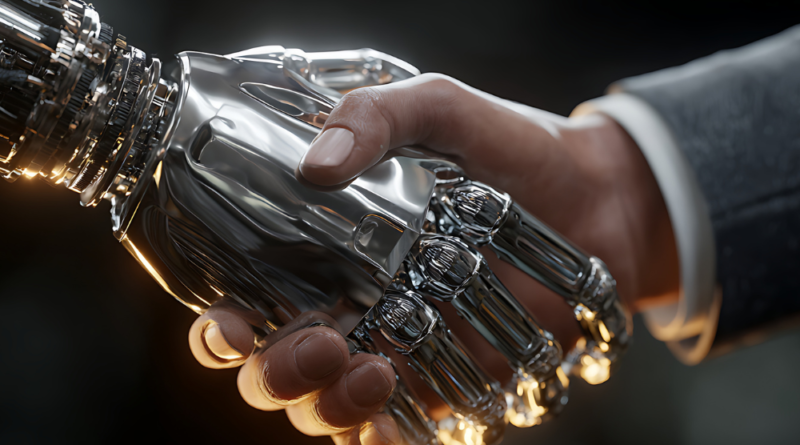
The more useful question is how humans and artificial intelligence will work together while protecting the rights and livelihoods of the people whose creativity makes the technology valuable in the first place.
There is room for innovation, but innovation should not require creators to surrender all control over their work.
There is room for AI tools in the creative process, but using those tools responsibly requires an understanding of their limitations and the rights of other people.
There is also room for new business models that allow creators and technology companies to benefit from one another rather than treating each other as opponents.
Nigeria Needs to Prepare
Nigeria has a growing population of writers, musicians, filmmakers, designers, developers, photographers, educators and digital creators. Many of these people are building careers that depend heavily on intellectual property.
As artificial intelligence becomes more deeply integrated into the creative economy, Nigeria will need policies and institutions capable of addressing the questions that come with it.
Creators need clearer information about their rights. Technology companies need predictable rules. Businesses need to understand what they can legally use. Consumers need to become more digitally literate.
The conversation should begin before the problems become too large to manage.
Who Owns Our Creative Work?
Perhaps that is ultimately the question we should be asking. If human creativity is being used to develop increasingly powerful artificial intelligence systems, the people who produce that creativity should not become invisible in the process.
We should be able to enjoy the benefits of new technology while still respecting the rights of the people whose work helped make that technology possible.
For Nigerian creators, this conversation is especially important because the digital world has removed many of the geographical barriers that once limited access to global audiences. A creator in Lagos, Enugu, Abuja, Port Harcourt or anywhere else in Nigeria can now produce work that reaches people across the world.
That opportunity should be protected.
As AI becomes more powerful, Nigerian creators should not simply ask how they can use it to create faster. They should also ask how they can use it without giving away rights they did not intend to surrender.
Technology will continue to evolve, but one principle should remain important: human creativity has value, and the people who create should have a meaningful voice in deciding how that creativity is used.