Nigeria’s Economy Is Growing, but Are Nigerians Feeling the Growth?
Nigeria’s economy is growing.
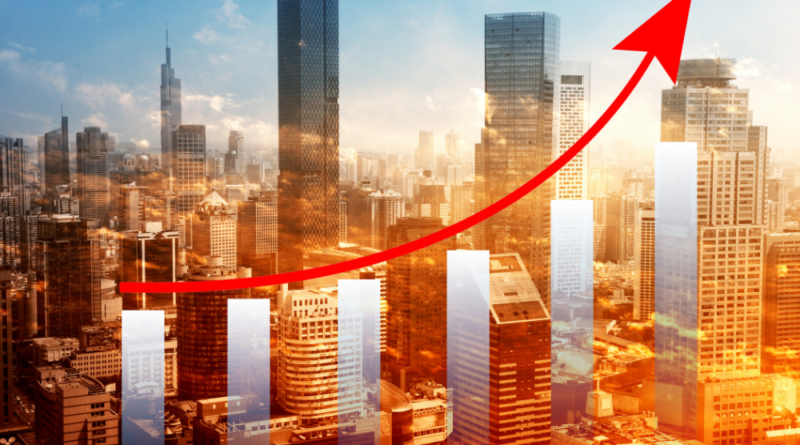
At least, that is what the latest numbers tell us. According to the National Bureau of Statistics, Nigeria’s Gross Domestic Product grew by 4.43 per cent in the second quarter of 2026. It was an improvement on the 3.89 per cent recorded in the first quarter of the year and higher than the growth recorded during the same period in 2025.
On paper, that is good news.
Economic growth means that more economic activity is taking place. Businesses are producing goods and services. Different sectors are contributing to the economy. Agriculture is growing. Services are expanding. Oil production has also improved.
These are not insignificant developments. But for many Nigerians, there is another question that matters just as much as the GDP figure itself:
Are ordinary Nigerians actually feeling this growth?
For someone struggling to pay rent, buy food, fuel a car, run a generator, pay school fees or keep a small business alive, a positive GDP figure may not feel like good news at all.
And that is where the conversation becomes more complicated.
Economic Growth Does Not Automatically Mean a Better Life
One of the easiest mistakes we make when discussing the economy is assuming that national economic growth automatically means that life is improving for everyone.
It does not.
GDP measures the value of goods and services produced within an economy. When GDP grows, it means economic activity has increased.
But GDP does not directly tell us whether people have more money in their pockets.
- It does not tell us whether food has become affordable.
- It does not tell us whether salaries are keeping up with living costs.
- It does not tell us whether a young graduate has found a job.
- It does not tell us whether a family can comfortably pay its bills.
This is why an economy can grow while many people continue to struggle.
The national economy and the household economy are connected, but they are not exactly the same thing.
A country can report stronger economic growth while citizens are still asking why their everyday lives have not improved.
The Economy Nigerians Experience Every Day
For many people, the economy is not a graph or a percentage announced on television. The economy is what happens when they enter a market.
It is what happens when they open their electricity bill, when school fees are due, when transport fares increase, when a small business owner calculates the cost of restocking goods, or when a salary finishes before the month does.
This is the economy that people experience personally. And personal experience often shapes public opinion more strongly than national statistics.
If someone hears that the economy grew by 4.43 per cent but still spends a significant portion of their income on food and transportation, they may reasonably ask, “Where exactly is this growth?”
That question is not necessarily a rejection of the data.
It is a reflection of the difference between macroeconomic growth and everyday economic reality.
Growth Has to Reach People
Economic growth is important, but growth alone is not the final destination.
The real question is what that growth eventually produces. Does it create jobs, help businesses expand, increase productivity, lead to higher and more sustainable incomes, reduce poverty, or make essential goods and services more affordable?
These are the questions that determine whether economic growth becomes something people can actually feel.
A growing economy should eventually create opportunities beyond government announcements and impressive statistics.
- A farmer should be able to produce more and earn better.
- A small business should have a better chance of surviving and expanding.
- A graduate should have more employment opportunities.
- A worker should be able to see their income provide a reasonable standard of living.
When these things begin to happen on a wider scale, economic growth becomes more than a number.
It becomes visible.
Why the Public Can Be Skeptical
Understandably, some Nigerians react cautiously when they hear positive economic announcements.
For years, citizens have heard promises about growth, investment, development and recovery. Meanwhile, many households have continued to face difficult economic conditions.
So when a new GDP figure is announced, people naturally compare it with their own experiences. They ask themselves:
Has food become cheaper?
Has my income increased?
Has my business improved?
Can I save more than I did last year?
Are there more opportunities around me?
If the answers to these questions are mostly negative, it can be difficult for someone to celebrate a positive GDP figure. This does not mean economic growth is meaningless.
It means that governments and policymakers must understand that citizens judge economic success by what they experience, not only by what is announced.
The Difference Between Recovery and Prosperity
Perhaps Nigeria is currently dealing with an important transition. Economic stability and economic prosperity are not the same thing.
An economy may begin to stabilise after a difficult period without households immediately becoming more prosperous.
Inflation may begin to slow without prices suddenly returning to where they were before, investment may begin to improve without millions of jobs appearing immediately, and economic reforms may create long-term opportunities while people continue to experience short-term pain.
That does not mean people should ignore their present struggles simply because they are told that things may improve in the future.
People live in the present, families have bills today, businesses have expenses today, and workers need incomes that meet today’s cost of living.
This is why the next phase of economic progress must focus not only on stabilising the economy but also on translating that stability into improvements that ordinary people can experience.
Even President Bola Tinubu has recently spoken about the need to translate macroeconomic stability into microeconomic prosperity.
That distinction is important.
Nigerians Do Not Need to Choose Between Facts and Feelings
The GDP figure is a fact; Nigeria’s economy grew. But the difficulties many Nigerians experience are also real.
Both things can be true at the same time. We do not have to pretend that economic growth is bad news simply because many people are struggling.
At the same time, we should not expect struggling families to celebrate statistics that have not yet made a meaningful difference in their lives.
The conversation should not be about choosing one reality and ignoring the other.
Nigeria needs economic growth. But Nigeria also needs inclusive growth.
Growth that creates jobs, supports productive businesses, improves infrastructure, helps people earn sustainable incomes, and eventually makes it easier, rather than harder, for ordinary families to live with dignity.
What Should We Be Watching Next?
The 4.43 per cent GDP growth figure is encouraging, but it should lead to more questions rather than simply ending the conversation.
In the coming months, Nigerians should pay attention to whether economic growth is accompanied by improvements in other areas.
- Are more jobs being created?
- Are businesses finding it easier to operate?
- Are household incomes improving?
- Are food and transportation becoming more manageable relative to income?
- Are young people finding more opportunities?
- Is investment translating into productive economic activity?
These are some of the indicators that will help determine whether economic growth is moving beyond the headlines.
A healthy economy is not simply one that produces impressive statistics.
A healthy economy is one in which increasing numbers of people have a genuine opportunity to improve their lives.
The Number Matters, but So Does the Human Experience
Nigeria’s latest economic growth figure should not be dismissed. Growth is better than stagnation, and a stronger economy creates a foundation for future opportunities.
But a GDP percentage is only part of the story.
The other part of the story is the woman in the market trying to manage her household budget. It is the young graduate searching for work, the small business owner dealing with rising operating costs, the worker wondering whether their salary can still carry them through the month, and the family making difficult choices about what they can afford.
Until economic progress begins to make a noticeable difference in these everyday experiences, many Nigerians will continue to ask the same question whenever they hear that the economy is growing:
If the economy is growing, why are so many people still struggling?
Perhaps that is the question policymakers should take most seriously. Because economic growth is important. But in the end, people do not live inside GDP figures.
They live inside the economy those figures are supposed to represent.