
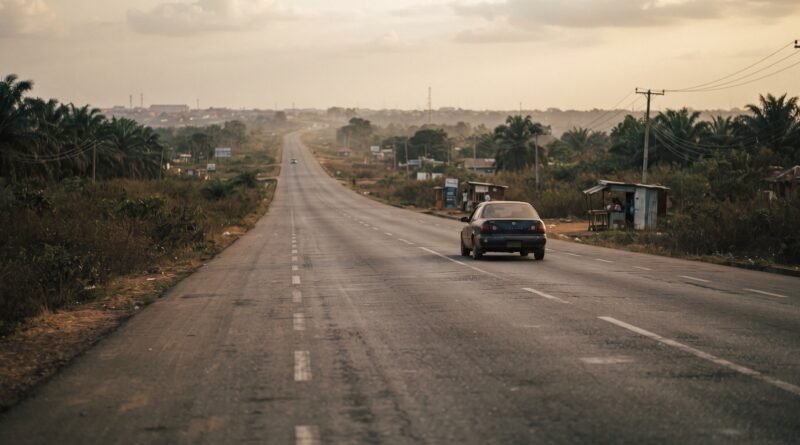
How Safe Are Nigeria’s Roads? The Growing Fear of Travelling
The news that 15 members of the National Youth Service Corps and six other Nigerians had been rescued after being abducted in Kogi State brought understandable relief to many people.
For the victims and their families, the rescue marked the end of what must have been a frightening experience. Reports indicated that the corps members were travelling after completing their orientation activities when they were abducted. Security agencies later carried out an operation that resulted in the rescue of the victims, bringing together the efforts of different security and intelligence agencies.
The rescue is certainly good news, and the security personnel involved deserve recognition for their efforts.
However, beyond the relief of hearing that the victims have been rescued, the incident raises a more difficult question: How safe are young Nigerians when they travel on Nigerian roads?
This is the larger conversation that stories like this should encourage us to have.
When an Ordinary Journey Becomes a Source of Fear
For most young Nigerians, travelling after completing the NYSC orientation programme should be an ordinary part of the experience. Some corps members may be heading to their places of primary assignment, while others may be travelling home to spend time with their families before beginning the next phase of their service year.
It should be a journey that comes with the excitement of moving forward.
Unfortunately, insecurity on some Nigerian roads has made travel a source of anxiety for many families. Before a loved one begins a long journey, family members may want to know which route they are taking, what time they are leaving and who they will be travelling with. They may continue checking in throughout the journey until they finally receive confirmation that the person has arrived safely.
That level of concern has become increasingly familiar to many Nigerians.
Travelling from one state to another should not feel like a gamble. A student, worker, business owner or young graduate should be able to begin a journey with a reasonable expectation that they will arrive at their destination safely.
Yet, stories of kidnapping and attacks on travellers continue to create fear.
The Relief of a Rescue Does Not Remove the Bigger Problem
It is important to celebrate successful rescue operations because every life saved matters. The security agencies involved in bringing the victims home should be acknowledged for their work.
At the same time, a successful rescue does not remove the questions raised by the kidnapping itself.
How did the abductors operate in the area? How long had they been active? Are there other routes where travellers face similar risks? What information did security agencies have before the incident, and what can be done to prevent future attacks?
These questions are important because rescue operations take place after people have already experienced danger and trauma.
A country should certainly have the capacity to rescue kidnapping victims, but the ultimate goal should be to prevent people from being kidnapped in the first place.
Prevention must therefore receive as much attention as response.
Young Nigerians Already Face Enough Uncertainty
For many young people, the NYSC year represents a transition into a new stage of life. After years of education, they are beginning to think seriously about employment, careers, financial independence and their future.
Many graduates are already uncertain about what comes next. They may be searching for jobs, learning new skills or considering starting businesses. Some are thinking about opportunities outside Nigeria because they are unsure about their prospects at home.
These are significant concerns on their own. Young Nigerians should not also have to worry about whether travelling from one part of the country to another will put their lives at risk.
If we genuinely want young people to participate confidently in national life, they must be able to move around the country safely.
National integration becomes more difficult when people are afraid to travel.
Economic opportunities become limited when people cannot move freely.
Families also suffer when every long-distance journey becomes a source of anxiety.
When Safety Begins to Feel Like Luck
One of the most troubling consequences of insecurity is that people can begin to think of safe travel as a matter of luck.
Someone may travel through a particular road without incident and simply say that they were fortunate. Another person may travel through the same area at a different time and become the victim of an attack.
That unpredictability creates fear because people do not always know which journey will be safe and which one may become dangerous.
As a result, Nigerians increasingly adjust their travel plans based on stories they hear from friends, family members and social media. Some people avoid travelling at night, while others avoid particular routes completely. Important journeys may be postponed because people are uncertain about security conditions.
These concerns affect much more than individual travellers.
Businesses depend on the movement of people and goods, students need to travel for school, families travel for weddings, funerals and other important events, and workers travel for professional opportunities.
When roads become unsafe, everyday life becomes more difficult.
Security Is About More Than Official Announcements
When security is discussed publicly, the focus is often on military operations, arrests, patrols and the number of people who have been rescued.
These things are important, but security should also be measured by the everyday experiences of ordinary citizens.
- Can a student travel safely from one state to another?
- Can a family take a road trip without living in fear?
- Can a business owner transport goods without worrying about an attack?
Can parents allow their children to travel without spending hours anxiously waiting for confirmation that they have arrived safely?
These questions reveal how secure people actually feel. A country may record successful security operations, but if ordinary citizens are afraid to travel, then more work needs to be done.
The true measure of security is not only the ability to respond when something goes wrong. It is also the ability to create an environment in which fewer things go wrong in the first place.
Prevention Must Become a Bigger Priority
Nigeria needs effective rescue operations, and every effort should be made to bring kidnapping victims home safely.
However, prevention must remain the larger goal.
This requires better intelligence gathering and stronger coordination among security agencies. It also requires sustained attention to areas that have repeatedly become vulnerable to criminal activity.
Local communities can also play an important role because people who live in an area often understand its environment and activities better than outsiders. When there is trust between communities and security agencies, useful information can be shared more quickly.
Technology may also have a role to play in improving road security through stronger communication systems, better intelligence gathering and faster emergency response.
Most importantly, efforts to tackle kidnapping must be consistent. Criminal groups should not only become the focus of security operations after an incident attracts national attention. Sustained action is necessary to make it more difficult for criminal networks to operate.
A successful rescue should not be the final chapter. Security agencies must also continue working to identify and dismantle the networks responsible for such crimes.
We Can Celebrate the Rescue and Still Ask Questions
Public conversations do not always have to be divided between celebration and criticism.
We can appreciate the security personnel who participated in the rescue and still ask how the kidnapping happened.
We can be grateful that the victims returned home and still ask what is being done to protect future travellers.
We can recognise progress without pretending that the problem has disappeared.
In fact, asking these questions is part of taking the lives of Nigerians seriously.
The rescued victims mattered enough for people to celebrate their freedom. Future travellers also matter enough for us to think seriously about how similar incidents can be prevented.
Young Nigerians Deserve to Travel Without Fear
The rescue of the 15 NYSC members and six other Nigerians is a reminder of both what Nigeria can do and what Nigeria still needs to address.
It demonstrates that coordinated security efforts can produce positive results. At the same time, the kidnapping reminds us that too many Nigerians still begin ordinary journeys with concerns about whether they will arrive safely.
Young people already face significant uncertainty as they try to build careers, find employment and create stable futures. They should not have to add the fear of kidnapping to every journey they make.
The goal should not simply be to rescue people after they have been abducted; the goal should be to build a country in which fewer people are abducted in the first place.
Until Nigerians can travel with greater confidence and peace of mind, the conversation about security will remain unfinished.
The rescue of these 15 NYSC members and six other Nigerians is undoubtedly good news. However, it should also encourage us to ask a larger question about the kind of country we want to build.
When will Nigerians be able to begin a journey with the simple expectation that they will arrive safely at their destination?