
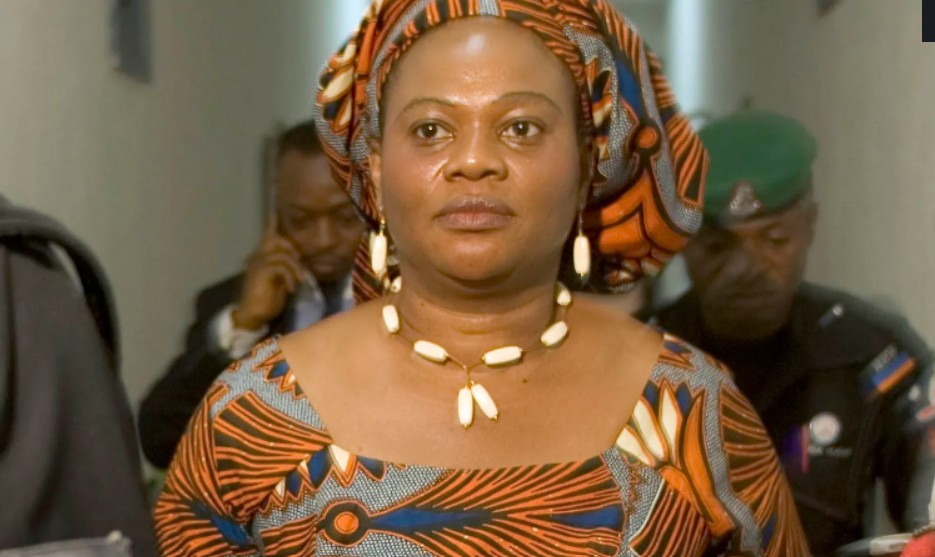
She Fought Death to Save the Living
The Life, Belief, and Indestructible Legacy of Professor Dora Nkem Akunyili
There is a particular kind of woman who arrives in the world fully formed, not in the sense that she is born without struggle, but in the sense that every chapter of her life, even the painful ones, seems to have been preparing her for a purpose larger than herself. Professor Dora Nkem Akunyili was that kind of woman.
She was a pharmacist, a scholar, a mother, a wife, a public servant, and, perhaps most significantly, a warrior. Not in the theatrical sense, but in the quiet, unflinching way of a woman who had decided, early and finally, that some things were worth more than safety. She looked at a nation being slowly poisoned and said, “Not on my watch.”
This is her story.
I. A Life Built for Purpose
Dora Nkem Akunyili was born on July 14, 1954, in Makurdi, Benue State, to Chief Paul Young Edemobi of Nanka, Anambra State. She was Igbo by heritage and Catholic by faith. These two identities would quietly shape everything about how she moved through the world: with deep community, a clear moral compass, and a commitment to truth that bordered on the sacred.
She was brilliant from the start, graduating with a Grade I Distinction from Queen of the Rosary Secondary School in Nsukka in 1973, earning both an Eastern Nigerian Government scholarship and a Federal Government undergraduate scholarship. Excellence was not something she was given; it was something she earned, over and over, until it became a habit.
She went on to study pharmacology at the University of Nigeria, Nsukka, graduating in 1978, and earned her PhD from the same institution in 1985. She later became a Post-Doctorate Fellow at the University of London and a Fellow of the West African Postgraduate College of Pharmacists. She was not just a scientist; she was a scholar in the truest sense, curious, thorough, and committed to knowledge as a tool for human good.
For years, she lectured at the University of Nigeria, supervising postgraduate students and serving on faculty committees. She had published eighteen journal articles and a book, and presented research papers at international conferences. She dedicated her life to science and service long before the world knew her name.
“Excellence was not something she was given; it was something she earned, over and over, until it became a habit.”
II. The Wound That Became a Mission
Every great reformer has an origin story. For Dora Akunyili, it was not a policy paper or a political ambition. It was a sister.
In 1988, her younger sister Vivian, a young woman in her mid-twenties who had been managing diabetes, died after taking counterfeit insulin. Fake insulin. Manufactured to look like medicine, sold as medicine, but containing none of the life-sustaining properties the label promised. Vivian paid for medicine and received death in return.
This is the wound that never fully healed. And it is the wound that Dora Akunyili refused to let be meaningless. As a pharmacist, she understood exactly what had happened, not in vague, general terms, but in precise, clinical detail. She knew the mechanism of betrayal and the cruelty of it. And she carried that knowledge forward, not as grief alone, but as purpose.
Years later, she would describe the counterfeit drug trade in unambiguous terms: terrorism and mass murder. She was not being dramatic; she was being precise.
“To sell chalk in place of antibiotics, powder in place of anti-malaria drugs, or unsterilised water in place of adrenaline is clearly to sell death in return for profit.” – Professor Dora Akunyili, Women’s Leadership in Emerging Democracy, 2006
III. The State of Things When She Arrived
In April 2001, President Olusegun Obasanjo appointed Dora Akunyili as Director-General of the National Agency for Food and Drug Administration and Control (NAFDAC). It is worth pausing here to appreciate what she walked into.
Testing at the time revealed that approximately 70 percent of drugs sold in Nigeria were counterfeit. The regulatory agency meant to prevent this had become part of the problem: staff who demanded bribes, delayed legitimate inspections, and helped bad actors move their products into markets. Counterfeit manufacturers operated with virtual impunity. They had friends in high places, money to spend, and years of unchallenged operation behind them.
Some people, hearing this, might have been cautious. They might have decided to work slowly, to negotiate, or to find a middle path. Dora Akunyili was not that kind of person. From the moment she resumed office, she declared the eradication of counterfeit drugs and unsafe food her top priority, not a long-term goal or a five-year plan, but an immediate mission, and she started at once.
Those who had grown comfortable under the old regime were not pleased.
IV. The War She Chose to Fight
What happened next was not metaphorical. It was literal, physical, dangerous, and sustained.
When those profiting from the fake drug trade realised that bribing her was not going to work, they escalated. Threatening phone calls came to her home and to her husband. Fetish objects appeared in her office: a tortoise, blood-stained feathers, African beads, and other symbols meant to intimidate. NAFDAC facilities across the country were attacked and burned. Her staff members were intimidated, harassed, and threatened.
She did not flinch.
Then, on December 26, 2003, gunmen opened fire on her convoy as she was travelling to visit her mother-in-law in Anambra State. Bullets shattered the back windscreen of her car. One bullet pierced her headscarf and burned her scalp. A bus driver nearby was killed on the spot. Her youngest son, Obuneme, survived a kidnapping attempt that same year and was promptly sent abroad for safety.
She survived and went back to work.
This is the part of the story that demands we stop and sit with it for a moment. She survived an assassination attempt and went back to work. Not because she had no fear, but because her sense of what was right was stronger than her fear of what could happen. That is not ordinary courage. That is the kind of courage that reshapes history.
In a 2006 speech, she spoke plainly about what she was fighting: “The fake drug industry is terrorism. It is mass murder.” She did not soften her language or protect anyone’s sensibilities. She called a thing what it was.
V. What She Built
Under Professor Akunyili’s leadership from 2001 to 2008, the counterfeit drug rate in Nigeria dropped by an estimated 80 to 90 percent. Think about what that means. Think about how many invisible lives that represents: men, women, and children who took medicine that actually worked, who survived infections and diseases that would have killed them in the years before she arrived.
NAFDAC was transformed from a dormant, compromised institution into a globally recognised regulatory body. The template she laid at the agency continued to shape it long after she was gone. She brought in training, enforced standards, held people accountable, and made it clear, more by example than by memo, that integrity was not negotiable.
In 2008, she was appointed Minister of Information and Communications, where she launched the Rebrand Nigeria Project, coining the now-famous slogan: Good People, Great Nation. She believed in Nigeria. She believed the country could become what it was meant to be if its people chose to hold each other and their institutions to a higher standard.
The awards she received over her lifetime numbered 930, more than any other Nigerian in history. They came from international bodies, governments, universities, and civil society organisations around the world. Among them were Time Magazine’s recognition as one of the 18 Heroes of Our Time in 2006, the Transparency International Integrity Award in 2003, and the Order of the Federal Republic.
When she died, 110 of those awards were still unopened in boxes. She had been too busy working to stop and celebrate herself.
VI. The System That Finally Took Her
This section is the hardest to write. Not because the facts are unclear, but because of what they mean.
As far back as 1998, while working with the Petroleum Trust Fund, Dora Akunyili was told she might have a serious illness and would require surgery. She was given funds to travel to the United States for treatment: $12,000 for the surgery and $5,000 for tests. When she arrived, doctors reviewed her case and determined she did not need the operation after all. She returned the $12,000 to the PTF.
Let that sit. In a system where public funds are routinely misappropriated, where money meant for healthcare, infrastructure, and governance disappears into private pockets, Dora Akunyili returned $12,000 she could easily have kept. Then, PTF chairman Muhammadu Buhari wrote her a formal letter of commendation. It was this act of startling integrity that eventually brought her to President Obasanjo’s attention when he was searching for someone to lead NAFDAC.
But there is a bitter irony folded into that story. Years later, it emerged that the second medical assessment in 1998 had been wrong. The original diagnosis was correct; she did have cancer. And because that finding was overruled, the illness went undetected and untreated for years.
By the time the cancer was confirmed, it had progressed. She fought it as she had fought everything else, with determination, without spectacle, refusing to be defined by it. She continued to work. In 2014, she appeared at the National Conference in Abuja as a delegate, visibly frail, a shadow of the vibrant woman Nigerians had known. Photographs from that day circulated widely, and the nation held its breath.
On June 7, 2014, Professor Dora Nkem Akunyili died at a specialist cancer hospital in India. She was fifty-nine years old.
A pharmacist, someone who had given her career to fighting the consequences of bad medicine, died in part because of a misdiagnosis. The system she had tried to fix could not protect her. The irony is almost too heavy to bear.
She was survived by her husband, six children, and three grandchildren. She was buried in her husband’s ancestral home in Anambra State.
VII. Why She Still Matters
Since 2019, June 7, the day Dora Akunyili died, has been observed as World Food Safety Day. Let that land. The world did not just mourn her passing, but marked it and made it mean something beyond grief. She matters because:
- She proved something that systems of corruption spend enormous energy trying to disprove: that one person with integrity and backbone can change the conditions of millions of lives. She did not have unlimited resources. She did not have a peaceful tenure. She had death threats, fetish objects on her desk, and bullets in her headscarf, and she still showed up.
- She was an African woman who led where most men had woefully failed, as her own contemporaries noted. She did not lead gently, apologetically, or with one eye on what people would say. She led with the full weight of who she was.
- In a country still learning what public service can look like, she set a standard that has not been surpassed.
- Her story ends with a question that every Nigerian, every person who lives in a system that is less than it should be, must eventually answer for themselves:
“What does it cost a nation when it allows its best people to be hunted, misdiagnosed, and buried before their time?”
Dora Akunyili gave Nigeria everything she had. She returned money she could have kept. She showed up to work after someone tried to kill her. She coined a phrase, Good People, Great Nation, not as propaganda, but as a prayer and a challenge addressed as much to her country as to herself.
The least we can do is remember her clearly. Not as a statue or a slogan, but as a woman who was afraid and showed up anyway. A woman whose sister died from a fake injection and who decided, quietly and finally, that this world would be different because she had passed through it.
And it was.
Professor Dora Nkem Akunyili (OFR) | 14 July 1954 to 7 June 2014