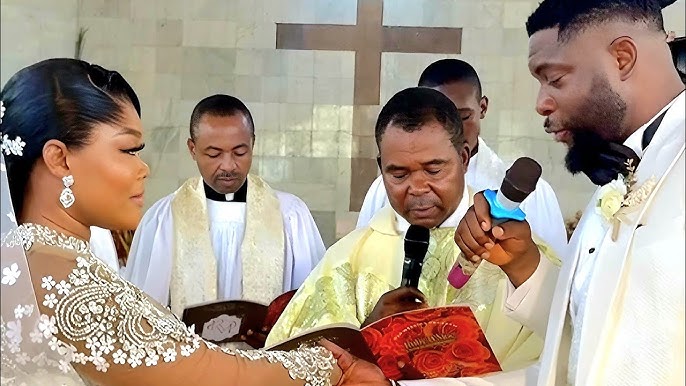
Last weekend, social media went buzzing with news from one of Nigeria’s wealthiest families. Teni Otedola, daughter of billionaire Femi Otedola, tied the knot with her long-time lover, singer and entrepreneur, Mr. Eazi. A few hours later, she updated her social media profiles, swapping the famous Otedola surname for her husband’s name, Ajibade.
And then, as expected, the internet had opinions.
Some praised her for embracing tradition. Others were shocked: “Why would she drop the powerful Otedola name for a man’s surname that isn’t as big or influential?” Some even felt she was “losing her brand identity.”
That made me pause and ask: Is it really a bad thing for a woman to change her surname after marriage? Why do we make so much fuss about it?
The Power of a Name
Names are powerful. They carry history, legacy, and identity. For someone like Teni, her maiden name is not just personal, it’s cultural currency. “Otedola” rings a bell anywhere in Nigeria and beyond. It carries wealth, influence, and recognition.
But does changing her name suddenly erase all of that? Not at all. Teni remains Otedola’s daughter. Her achievements, networks, and privileges don’t vanish because she chose to honour her husband by taking his name.
Tradition vs. Modern Identity
Traditionally, in many African cultures, it is considered honourable for a woman to adopt her husband’s name as a sign of unity and family identity. The two “become one,” not just spiritually but socially.
But in today’s world, many women want to maintain their maiden names because they’ve built careers, brands, or personal identities around them. Some choose to hyphenate, others keep both, while some change nothing.
And guess what? None of these choices is wrong.
Why the Fuss?
So, why is the internet up in arms about Teni’s decision?
-
Because she’s from a famous family. People think the Otedola name is too “big” to give up.
-
Because society still equates a woman’s choices with loss or submission. If she changes her name, some assume it’s because she “gave up her power.”
-
Because people love drama. If it were an ordinary woman changing her name, hardly anyone would notice.
At the Heart of It
A name is personal. It’s not the name that makes the person; it’s the person that gives the name meaning. If tomorrow, Ajibade becomes a household name, it will be because of what Mr. Eazi and Teni built together, not because she clung to or abandoned “Otedola.”
So maybe the real question isn’t what’s in a name? But why do we police women’s choices so much?
Final Thought
Teni’s decision doesn’t make her less of an Otedola. It simply makes her Mrs. Ajibade. And perhaps, that’s exactly what she wants to be known as now.
At the end of the day, whether a woman changes her name or keeps it is her decision, not society’s.