Breaking: Soldiers Seize Power in Benin Republic
— What You Need to Know
What happened: the coup attempt unfolded
In the early hours of Sunday, December 7, 2025, soldiers in Benin, led by Pascal Tigri, launched an assault on the official residence of Patrice Talon, the current president of Benin.
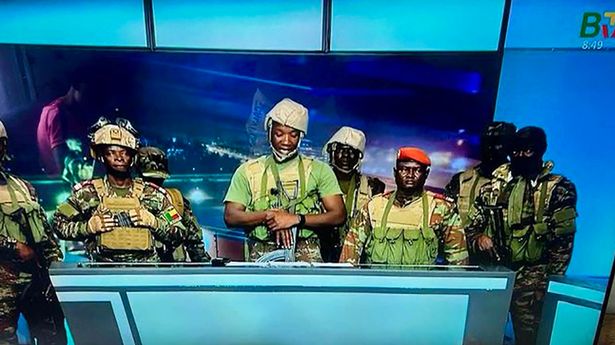
Soon after, a group of uniformed officers seized the state television broadcaster and appeared on air to announce that they had removed Talon from power. According to them, all state institutions were dissolved, the constitution was suspended, political parties were suspended, and national borders were closed. They declared that a new transitional authority, the Military Committee for Refoundation (CMR), would take over, with Pascal Tigri as head.
Gunfire was reported around the presidential residence and in parts of the capital, and multiple sources confirmed serious unrest in the commercial capital (as well as Porto-Novo, the official city of the presidency).
As of now, within hours of the declaration, the situation remains fluid. The official armed forces and government spokespeople claim that much of the military remains loyal to Talon, and that efforts are underway to reassert control.
Why it matters: context and stakes
Democratic stability under threat: Benin has, in recent years, been regarded as one of the more stable and relatively orderly democracies in francophone West Africa. This coup attempt, the first of this magnitude in decades, represents a dramatic rupture.
Proximity to Nigeria: As someone in Abuja, you know how much regional stability matters. Instability in Benin may have ripple effects — increased refugee flows, border pressure, economic disruption, and regional insecurity.
Regional pattern of coups: This event adds to a growing string of military takeovers across West and Central Africa in recent years, underlining what some analysts call the “coup belt.”
Uncertain future: With the transitional committee’s claims, dissolution of state institutions, and unclear loyalties within the security apparatus, Benin stands at a crossroads: whether it will return to constitutional order, slide into prolonged instability, or undergo a new form of governance.
What we don’t yet know — danger and uncertainty
The exact fate and whereabouts of President Talon and his inner circle remain unclear. Some reports suggest he may be safe; others say the situation is too chaotic for confirmation.
It is uncertain whether the coup plotters actually hold control beyond the state broadcaster. Major state institutions, security forces, and local administrations may still resist.
The reaction from civil society, other political actors, and regional/international bodies remains uncertain, especially given the fluid nature of the events.
Reflections: What this could mean for Africans
For many Africans, especially us in Nigeria and neighbouring countries, this coup in Benin may evoke a sense of dread and déjà vu. The drift from democracy to military intervention threatens the fragile political gains across the continent.
But it also raises deeper questions: What leads soldiers to believe they need to “refound” a republic that has functioned relatively peacefully for years? Does this signal a deeper structural failure: economic crisis, corruption, or disenfranchisement?
If the coup succeeds, will it lead to more instability, or could it, by some strange twist, open space for reforms? History offers no guarantees.
What will the neighbours do? Will countries like Nigeria and regional blocs step in, diplomatically or otherwise, to demand a return to constitutional order?
As we watch developments, we have to remember: even though borders separate us, the fate of one African nation resonates across the continent.