Charlie Kirk’s Death: A Tragic Moment in America’s Political Story
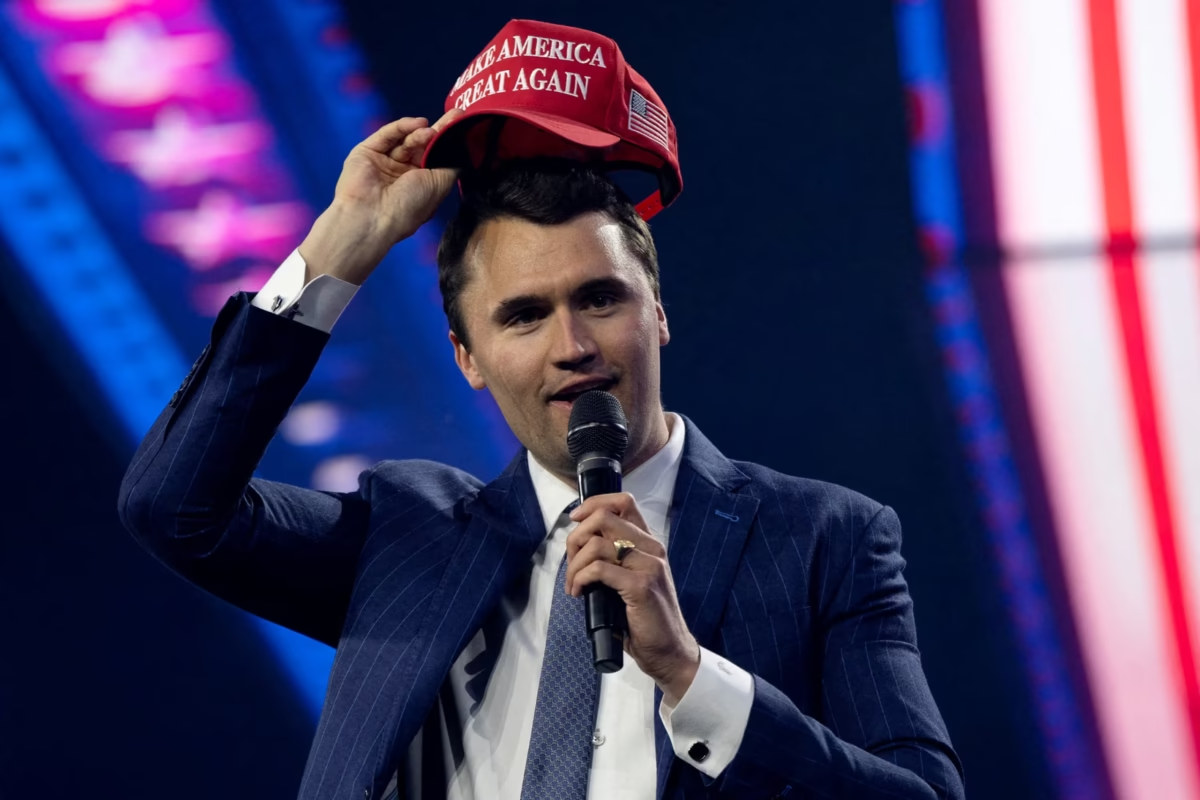
On September 10, 2025, the conservative activist and commentator Charlie Kirk was shot during a live event at Utah Valley University. Just 31 years old, Kirk was a rising voice in American politics, best known for founding Turning Point USA and for his fiery support of former President Donald Trump. What was supposed to be another stop on his “American Comeback Tour” ended in tragedy — a single gunshot, a stunned crowd, and a nation left asking hard questions.
Witnesses describe hearing a loud crack from a nearby building. Moments later, Kirk reached for his neck, blood visible on his shirt, before collapsing. Security rushed him offstage. Hours later, he was pronounced dead. President Trump confirmed the news, calling him a “warrior for truth” and announcing that he would be honoured posthumously with the Presidential Medal of Freedom.
Beyond the Headlines
Charlie Kirk was no stranger to controversy. To some, he was a dangerous voice, amplifying conspiracy theories and polarising rhetoric, and to others, he was a courageous defender of conservative values, unafraid to challenge mainstream narratives. His organisation, Turning Point USA, built a massive network of young conservatives and helped shape the political tone of an entire generation.
Love him or hate him, Kirk represented a very real current in American society: the frustration of millions who feel unheard by institutions, media, and government. His rise was as much about his talent as it was about the mood of the nation.
A Nation on Edge
His assassination has reignited fears about political violence in America. When words fail, and disagreements turn into targets, democracy itself is wounded. Whether one agreed with Kirk’s ideas or opposed them bitterly, the idea that speech can now be silenced with a bullet should trouble us all.
The identity and motives of the shooter are still under investigation, but the implications are clear: we are living in a moment where political passion has boiled into something darker.
The Legacy Left Behind
Charlie Kirk leaves behind a movement that is likely to grow even louder in his absence. Martyrdom has a way of amplifying voices, not silencing them. His followers, already passionate, will likely push forward with even greater energy, while critics will continue to wrestle with the difficult legacy of his style and message.
But beyond politics, there is also a human story — a young man, a husband, and a son, gone too soon. And a sobering reminder: behind every public figure is a fragile life, not immune to violence.
Closing Thought
Whether you agreed with Charlie Kirk or not, his death is a tragedy. It should force us to reflect not only on what he stood for but on the kind of society we are becoming. Are we so divided that disagreement now justifies violence? Are we truly listening to one another anymore?
Perhaps the best way to honour his memory and the memory of others taken by political violence is to recommit ourselves to dialogue, not destruction.